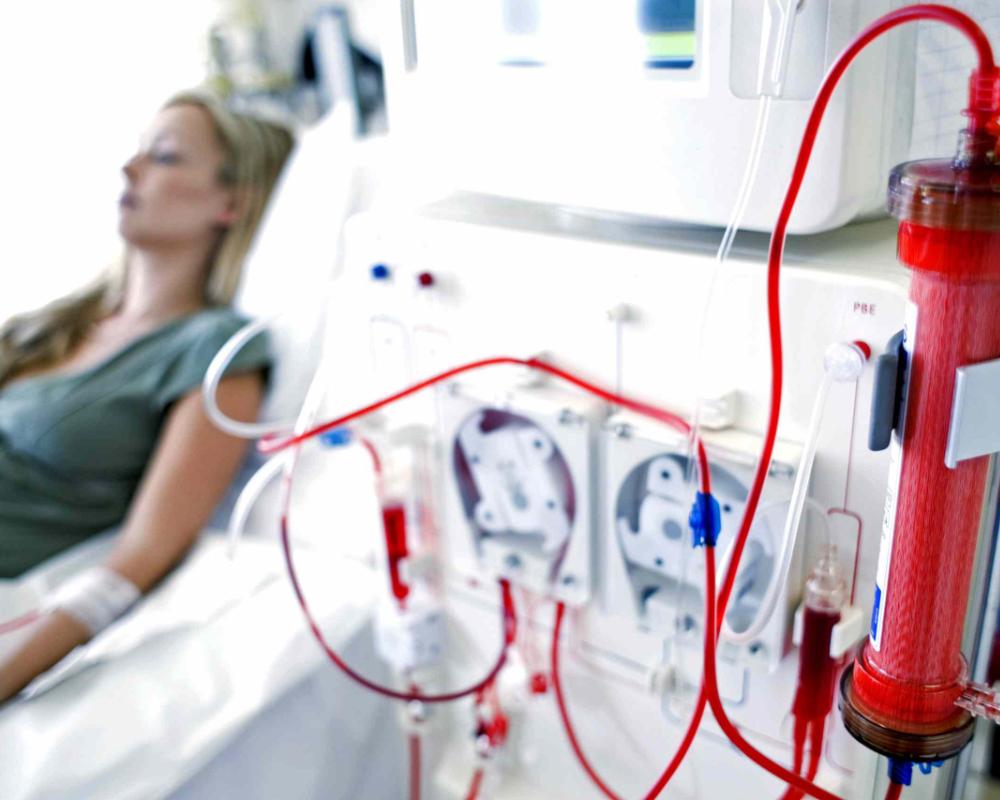

Living with Chronic Kidney Disease (CKD) can often feel like learning to navigate a completely new language. Between adjusting your diet, managing your blood pressure, and keeping track of endless lab appointments, it is easy to feel overwhelmed by the sheer volume of medical jargon thrown your way.
Among all the metrics used to track your health, one particular laboratory marker stands as the foundational compass for your care: the egfr blood test. Short for estimated glomerular filtration rate, this calculation acts as your personal kidney function score, letting you and your medical team know exactly how well your body is filtering out metabolic waste.
Understanding this number is one of the most empowering steps you can take on your wellness journey. Instead of treating your labs like a mysterious report card, learning what your egfr blood test means allows you to actively collaborate with your doctor, advocate for the right treatments, and take proactive steps to protect your lasting kidney health.
What is an egfr blood test and how does it measure kidney function?
An egfr blood test is a standard laboratory evaluation used to calculate how many milliliters of blood your kidneys' tiny filtering units, known as glomeruli, clear of waste per minute (Zsom et al., 2022). Rather than undergoing a complex, hours-long direct filtration test, a laboratory simply checks a routine sample of your blood for a waste product called creatinine (Zsom et al., 2022). Creatinine is a natural byproduct of everyday muscle wear and tear that healthy kidneys normally filter out of the body completely (Zsom et al., 2022).
Once the laboratory determines the concentration of creatinine in your bloodstream, they apply a validated mathematical formula to estimate your overall filtration rate. This equation factors in your age and biological sex because muscle mass naturally varies across different demographics, which directly influences how much baseline creatinine your body produces.
To provide the most accurate assessment possible, many modern clinics now combine creatinine with a secondary tracking protein called Cystatin C. Because Cystatin C is not influenced by your muscle mass or recent dietary protein intake, this combined formula gives your nephrologist an incredibly reliable, highly customized look at your true filtration capacity.
What do different egfr blood test score ranges mean for CKD stages?
When you receive the results of your egfr blood test, the number is typically categorized into standard ranges that correspond directly to the five progressive stages of Chronic Kidney Disease. A score of 90 or higher represents normal, healthy kidney filtration, though a CKD stage 1 diagnosis may still be applied if there are structural abnormalities or protein spilling into the urine.
As the score drops, it indicates a reduction in your organs' filtering capacity. Stages 3a and 3b represent moderate kidney damage, where filtration efficiency sits between 30% and 59%. If your numbers fall into this specific window, your clinical team will focus heavily on adjusting your medications, monitoring your cardiovascular health, and implementing targeted lifestyle strategies to protect your remaining function.
A score below 30 signals a advanced stage of kidney disease. Stage 4 indicates severe dysfunction, acting as a crucial window to prepare for advanced treatment pathways, while Stage 5 represents kidney failure, where the filtration score drops below 15, and renal replacement therapies like dialysis or a transplant become necessary to sustain the body.
| CKD Stage | egfr blood test Range | Kidney Function Level |
| Stage 1 | 90 or higher | Normal or high function with signs of kidney damage |
| Stage 2 | 60 to 89 | Mildly decreased function |
| Stage 3a | 45 to 59 | Mildly to moderately decreased function |
| Stage 3b | 30 to 44 | Moderately to severely decreased function |
| Stage 4 | 15 to 29 | Severely decreased function |
| Stage 5 | Less than 15 | Kidney failure |
How often do I need an egfr blood test if I have kidney disease?
The frequency of your laboratory monitoring depends significantly on your current stage of kidney disease, your primary diagnosis, and how stable your numbers have been over time. For individuals in the early, highly stable phases of CKD, an annual evaluation alongside a routine urine test is typically sufficient to ensure your filtration remains steady.
If your kidney disease is progressing more rapidly, or if you are managing complex co-existing conditions like poorly controlled hypertension or type 2 diabetes, your doctor will likely request a blood draw every three to six months. More frequent checks allow your care team to catch subtle shifts in your filtration efficiency before severe complications arise.
It is also important to remember that tracking the overarching trend of your scores is far more critical than reacting to a single, isolated lab result. A temporary dip can easily be caused by transient factors like acute dehydration, a recent illness, or a new medication, whereas a consistent downward trajectory across multiple months is what truly signals a need for a change in your treatment plan.
What natural steps can help improve my egfr blood test numbers?
While structural, long-term scar tissue within the kidneys cannot be completely reversed, there are highly effective strategies you can implement to optimize your remaining organ function and potentially see a positive shift in your lab values. Managing your cardiovascular health is the single most vital component, as keeping your blood pressure tightly controlled prevents high-pressure damage to delicate renal blood vessels.
Adopting a customized, kidney-conscious dietary approach plays a massive role in reducing the workload placed on your filtration system. Working closely with a specialized renal dietitian can help you safely manage your intake of sodium, phosphorus, potassium, and dietary protein based entirely on what your specific blood work dictates.
Remaining perfectly hydrated, avoiding over-the-counter nonsteroidal anti-inflammatory drugs (NSAIDs) like ibuprofen, and engaging in regular, low-impact exercise are additional foundational steps. By lowering the metabolic demands and stress placed on your body, you create the ultimate internal environment for your filtration system to function at its absolute best.
Medical Disclaimer
The information provided in this article, including discussions surrounding the egfr blood test and Chronic Kidney Disease management, is intended strictly for educational and informational purposes. This content does not constitute professional medical advice, diagnosis, or treatment. Always seek the direct guidance of your physician, nephrologist, or other qualified healthcare providers with any questions you may have regarding a medical condition or the interpretation of laboratory results. Never disregard professional medical advice or delay seeking it because of something you have read in this post.
References
Zsom, L., Zsom, M., Salim, S. A., & Fülöp, T. (2022). Estimated Glomerular Filtration Rate in Chronic Kidney Disease: A Critical Review of Estimate-Based Predictions of Individual Outcomes in Kidney Disease. Toxins, 14(2), 127. https://doi.org/10.3390/toxins14020127
Cited by: 80